

April 3, 2026
Election Parallels, Even When Renting a Car
So, my colleague Mike was planning a trip to an election conference in Georgia when we were swarmed by headlines about TSA delays. I wished him safe and speedy travels, hoping for the best.
His trip to Georgia turned out a lot like most elections. The outcome depended on preparation, contingency planning and a hint of good fortune.
And he couldn’t help but notice parallels between traveling to an election conference and running an election.
Considering the Landscape
Before even booking a flight, Mike considered the landscape. TSA delays were the top news story everywhere he looked. Federal agents were being deployed to major U.S. airports. Gasoline and airline ticket prices were surging. Severe weather was forecast across the Midwest.
Knowing the landscape, should he drive two hours along a toll road to a large metro airport with expensive parking or fly out of his local regional airport? Staying local would save on gas and parking, and he’d likely dodge TSA delays. But it could add a connection and would undoubtedly bump up the cost of the flight. As election professionals are wont to do, he entered the data points into a spreadsheet to compare and contrast costs and time commitments as he moved toward a decision.
Assessing Risks
Next, Mike assessed risks related to his travels, from the likely – a flight delay or missed connection – to the unlikely – a pilot strike, which wasn’t on the radar. We do this all the time in elections. We recognize and plan for a host of risks, from weather events to disruptions at a polling place, to run safe and secure elections. Even if these risks never become reality, election offices are prepared to handle them.
Equipped with this research, Mike was ready to finalize his travel plans. He chose the local airport after balancing costs, time and risks.
We know travelers have choices that take them to the same destination. Voters have choices too, also arriving at the same place: casting a ballot. This is why we ask voters if they have a plan to vote, not if they plan to vote.
By now, you’re probably wondering what kind of chaos Mike experienced at the airport, with so many travelers arriving several hours early for flights and non-stop reports of TSA delays?
Zero. None. No chaos. 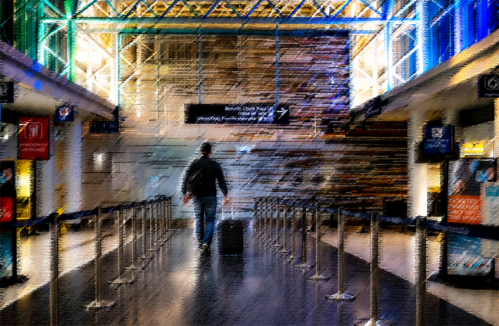
He felt like a VIP. He was seated at his departure gate 14 minutes after parking. About 30 minutes later, he was boarding his flight.
Contingency Plan in Action
The boarding pass scanner was down, so the airline had to check travelers in manually, but this didn’t result in a delay. If he’d been in line at his polling place, the same thing would have happened: poll workers seamlessly switching to their voter check-in contingency plan if electronic pollbooks went down. Everything still worked, only using a different approach.
Mike thought luck played a role in making his departure so quick and easy. Landing at a larger airport, Mike expected to face the chaos that was missing at his local regional airport.
Wondering what the scene was like at his destination airport with 24/7 news about crowds?
No lines. It wasn’t even “holiday busy.”
Mike made it to the baggage claim in no time. More luck! Then he headed to the car rental counter, where he encountered more election parallels.
Peak Planning
Mike had managed to dodge security lines, flight delays and lost luggage, and then came his car rental. Trying a different rental agency for the first time, he couldn’t “skip the line” and had to go to the rental counter. It was crowded, not unlike peak voting times at polling places on Election Day.
The wait was longer than expected, but interesting from an election professional’s perspective. Like election workers, car rental staff had their own terminology that would baffle most outsiders. Doing some quick, in-line language immersion, Mike discovered they were using the NATO Phonetic Alphabet as shorthand for different types of rentals. In that alphabet, “C” is “Charlie” and at the counter, “Charlie” is “Compact.” Mike waited patiently to rent a “Charlie.”
One rockstar counter worker made announcements to keep the line informed of what to expect, including estimated wait times. This just confirmed Mike’s observation of how election-like his travels were that day. Unfortunately, the wait time was 15 minutes per person in line.
Nearly an hour later, he had rental car keys in hand and the open highway ahead of him.
Business as Usual
Despite reports of long lines, chaos, crowds, federal agents and severe weather, Mike’s travel was almost perfect, and he made it to the conference on time with luggage in hand.
Careful preparation and consideration of logistics helped Mike make informed choices that put him on a path to success. Contingency planning at the gate helped ensure his flight left on time. And regular communication to those waiting in line to rent a car kept everyone calm and helped de-escalate potential disruptions.
This is what we expect on Election Day, when preparation, contingency planning, clear communications and a hint of good fortune will help election workers run yet another safe and secure election.